

What materials are other hydraulic jacks made of?
As a supplier of other hydraulic jacks, I've had the privilege of witnessing firsthand the intricate relationship between the materials used in these tools and their performance. Hydraulic jacks are essential in various industries, from automotive repair to heavy machinery maintenance. Understanding the materials that go into their construction is crucial for both manufacturers and end - users.
Steel
One of the most commonly used materials in the construction of other hydraulic jacks is steel. Steel offers a unique combination of strength, durability, and affordability. High - strength steel alloys are often employed in the production of the jack's cylinder, piston, and frame.
The cylinder of a hydraulic jack is the chamber where the hydraulic fluid is pressurized. It needs to withstand high internal pressures without deforming. Steel cylinders are machined to precise tolerances to ensure a proper seal with the piston. For example, in our RSM Hydraulic Cylinder And Manual Pump Set, the cylinder is made of a high - grade steel alloy that can withstand extreme pressures, providing reliable and long - lasting performance.
The piston, which moves within the cylinder to generate the lifting force, also requires a material with high strength and wear resistance. Steel pistons are typically heat - treated to enhance their hardness and reduce friction. This allows for smooth operation and minimizes the risk of damage to the cylinder walls.
The frame of the hydraulic jack, which supports the load and provides stability, is also commonly made of steel. A sturdy steel frame can ensure that the jack remains stable under heavy loads, preventing accidents and ensuring the safety of the operator.
Aluminum
Aluminum is another material that is increasingly being used in the construction of other hydraulic jacks, especially in applications where weight is a concern. Aluminum is lightweight, corrosion - resistant, and has good thermal conductivity.
In some mobile hydraulic jacks, such as our Mobile Hydraulic Jack, aluminum is used for the outer housing and some non - critical components. The lightweight nature of aluminum makes these jacks easier to transport and handle, which is ideal for on - site repairs or applications where mobility is essential.
However, aluminum is not as strong as steel, so it is usually used in combination with other materials or in applications where the load requirements are relatively low. For example, in smaller hydraulic jacks designed for light - duty tasks, aluminum can be used for the body while still providing sufficient strength and durability.
Cast Iron
Cast iron has a long history of use in the manufacturing of hydraulic jacks. It is known for its excellent casting properties, which allow for the production of complex shapes with high precision. Cast iron is also relatively inexpensive and has good vibration - damping characteristics.

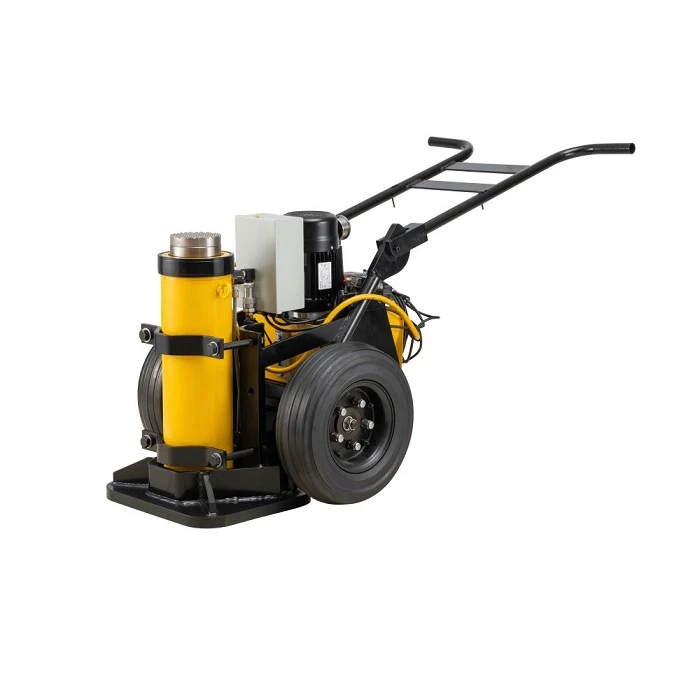
In some hydraulic jacks, cast iron is used for the base or the main body. The heavy weight of cast iron provides stability, which is important when lifting heavy loads. For instance, in larger industrial hydraulic jacks, a cast - iron base can help distribute the load evenly and prevent the jack from tipping over.
However, cast iron is brittle compared to steel and aluminum, and it is more prone to cracking under impact or excessive stress. Therefore, it is important to design the cast - iron components carefully to ensure their reliability.
Plastic
Plastic materials are also used in some parts of other hydraulic jacks. Plastic is lightweight, inexpensive, and can be easily molded into various shapes. It is often used for non - critical components such as handles, covers, and some internal parts.
For example, in some hydraulic jacks, the handle may be made of a high - impact plastic. This provides a comfortable grip for the operator and reduces the overall weight of the jack. Plastic covers can also be used to protect the internal components from dust, dirt, and moisture.
However, plastic has limitations in terms of strength and heat resistance. It is not suitable for components that are subjected to high pressures or temperatures. Therefore, plastic is usually used in combination with other stronger materials to ensure the overall performance of the hydraulic jack.
Rubber
Rubber plays a crucial role in the sealing system of hydraulic jacks. Hydraulic jacks rely on a series of seals to prevent the leakage of hydraulic fluid. Rubber seals are used between the piston and the cylinder, as well as at other connection points.
The rubber used in these seals needs to be resistant to hydraulic fluid, oil, and other chemicals. It also needs to have good elasticity and flexibility to ensure a tight seal. For example, in our Hydraulic Pusher, high - quality rubber seals are used to ensure that the hydraulic fluid remains within the system, providing efficient and reliable operation.
Composite Materials
In recent years, composite materials have started to gain popularity in the construction of hydraulic jacks. Composite materials are made by combining two or more different materials to achieve specific properties.
For example, carbon fiber composites are known for their high strength - to - weight ratio. In some high - performance hydraulic jacks, carbon fiber composites may be used for certain components to reduce weight while maintaining high strength. However, composite materials are often more expensive than traditional materials, so their use is usually limited to specialized applications.
Conclusion
The materials used in the construction of other hydraulic jacks are carefully selected based on the specific requirements of the application. Steel, aluminum, cast iron, plastic, rubber, and composite materials all play important roles in ensuring the performance, durability, and safety of these essential tools.
As a supplier of other hydraulic jacks, we are committed to using the highest - quality materials and the latest manufacturing techniques to produce hydraulic jacks that meet the diverse needs of our customers. Whether you need a heavy - duty industrial jack or a lightweight mobile jack, we have the right solution for you.
If you are interested in our other hydraulic jack products or have any questions about the materials and their properties, please feel free to contact us for procurement and further discussion. We look forward to working with you to provide the best hydraulic jack solutions for your needs.
References
- "Materials Science and Engineering: An Introduction" by William D. Callister Jr. and David G. Rethwisch
- Industry standards and specifications for hydraulic jack manufacturing


