

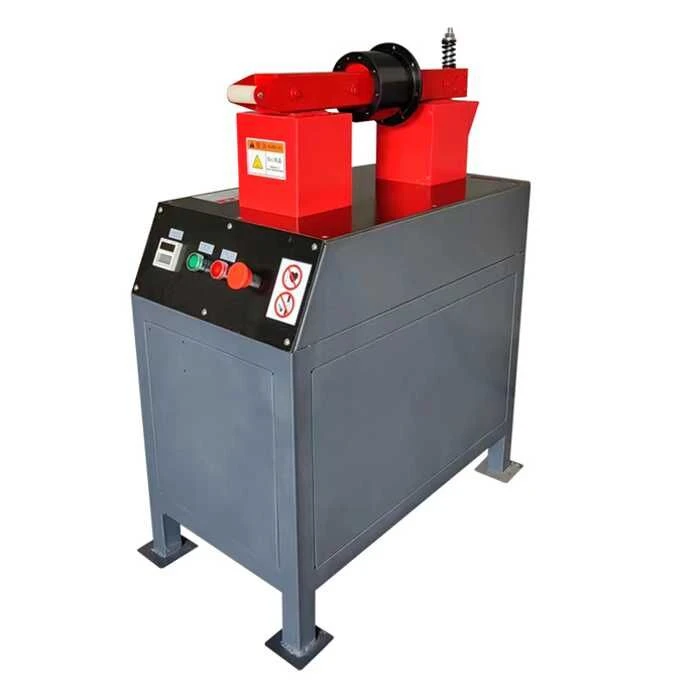
If you’ve ever worked in industrial maintenance, heavy equipment assembly, or metal fabrication, chances are you’ve used a bearing heater—those portable, electric tools designed to heat cylindrical metal components like bearings, sleeves, and bushings to expand them for easy installation without damage. As a supplier of bearing heaters, I get asked one question more than any other: “Can this tool work for non-metal materials?” It’s a fair query. Non-metal parts, from plastic gears and rubber seals to composite bushings, are ubiquitous in industrial settings, and being able to use a single heating tool for both metal and non-metal jobs would cut down on equipment costs, streamline workflows, and save time.
The short answer? It depends. A bearing heater works on a principle called induction heating: it generates an alternating magnetic field that induces eddy currents in conductive metal, which in turn create heat through electrical resistance. Non-metal materials, most of which are not electrically conductive, don’t react the same way to this magnetic field. But that doesn’t mean all non-metal parts can’t be heated with a bearing heater—just that you have to match the heater’s capabilities to the material, and prioritize safety above all else. Let’s break this down, because it’s not as simple as a yes or no.
First, let’s recap how a standard bearing heater operates. Unlike a flame torch, which can scorch or warp metal, induction heating is localized, consistent, and heats the part from the inside out. That makes it ideal for bearing work because it expands the inner race just enough to fit over a shaft without force, eliminating the risk of scratching the shaft or cracking the bearing. For metals like steel, stainless steel, or copper, the heater’s magnetic field penetrates the entire part, creating uniform heat. But non-metals? They’re either insulators (like plastics, ceramics, and rubber) or semi-conductive (some composites) with very low electrical conductivity. A standard induction bearing heater won’t generate heat in these materials directly, so you have to use a middleman: a conductive metal adapter that fits the non-metal part. For example, if you’re heating a plastic gear, you can place the gear inside a hollow steel ring that sits on the bearing heater’s work coil. The coil heats the steel ring, which then conducts heat to the plastic gear evenly. This method works, but it’s not without caveats.
I want to emphasize that this isn’t a one-size-fits-all solution. The biggest risk when heating non-metals with a bearing heater is overheating, which can cause irreversible damage to the part. Plastics, for instance, have a low glass transition temperature—often between 100°C and 200°C—while rubber can degrade as low as 60°C. A standard bearing heater can reach temperatures up to 300°C or higher, which is way too hot for most non-metals if you don’t monitor the temperature closely. That’s why, when we advise clients on this, we always recommend attaching a thermocouple directly to the non-metal part, not just the adapter, to track heat in real time.
There are exceptions. Some high-performance composite materials, like carbon fiber reinforced polymers (CFRP) or glass fiber composites, have slightly higher electrical conductivity, especially if they’re infused with conductive resins. In these cases, the induction field can generate heat directly in the composite, eliminating the need for an adapter. But this only works for thick, dense composite parts—thin composite sheets or low-conductivity composites will still need an adapter, and even then, you have to run the heater on a lower power setting to avoid melting the material.
To give you a real example of this in practice, last year a client of mine who repairs heavy construction equipment came to me with a problem. They needed to install a large composite ring gear on a new hydraulic excavator, and standard heating methods (like oven curing or open-flame heating) were taking too long and causing inconsistent expansion. They tried a few off-the-shelf solutions, but none worked until they used a Ring Gear Bearing Heater. Wait, let’s clarify: that specific tool, designed for large metal ring gears, was repurposed with a custom graphite liner to fit the composite ring. Graphite is semi-conductive, so it absorbed the induction heat evenly and transferred it to the composite ring without hot spots. They were able to expand the ring just enough to slip it over the excavator’s shaft in half the time it took with their old methods, and the part has been working flawlessly for 18 months now. That’s a concrete (pun intended) example of how a bearing heater can be adapted for non-metal parts, though it required a custom adapter and careful temperature control.
Now, let’s talk about materials that you should never heat with a standard bearing heater. Soft plastics like PVC, ABS, or nylon; rubber seals and gaskets; and thin ceramic parts are at the top of that list. Why? Even with an adapter, the heat from the induction coil can be too concentrated in the adapter, leading to uneven heat that can burn, warp, or melt the non-metal part. For example, a rubber O-ring used in hydraulic systems can crack if heated too quickly, even at moderate temperatures, because rubber is prone to thermal shock. If you have a job that involves rubber parts, a bearing heater isn’t the right tool—you’d be better off using a warm water bath or a specialized electric oven, though some companies do offer temperature-controlled heating mats for small rubber parts.
It’s also important to consider the design of the bearing heater itself. Some smaller, tabletop models are designed for low-heat applications, which might be better suited for delicate non-metal parts than heavy-duty industrial heaters that reach 500°C. That’s why it’s always a good idea to test a small, scrap piece of the non-metal part first before heating the actual component. For example, if you’re heating a plastic bushing, grab an extra bushing (or a scrap piece of the same plastic) and run the heater for 5 minutes with a thermocouple to see if the temperature stays within the safe range for the material. This small test can save you from ruining a costly part.

As a bearing heater supplier, we don’t just sell tools—we help clients solve problems. A common mistake I see is people trying to force a standard bearing heater to work for non-metal parts without understanding the physics behind induction heating. Let’s compare that to a related tool we offer: the Hydraulic Concrete Breaker. That tool is designed to break up concrete, a brittle, non-metal material, but you can’t use a bearing heater to break concrete—they work on entirely different principles. Similarly, a bearing heater’s strength is heating conductive metals, so adapting it for non-metals requires understanding how heat transfers from metal adapters to the target material.
Another point: time and efficiency. Induction heating is fast for metals, but for non-metals, you’ll often need to leave the part on the heater longer to get consistent heat, especially if you’re using an adapter. That means you can’t rush the process—skipping temperature checks or leaving the part on too long will lead to damage. Some clients try to crank up the heater’s power to speed things up, but that only creates hot spots, which are the number one cause of non-metal part failure in these applications.
There are also alternative methods for heating non-metal parts that might be more appropriate in some cases. For small plastic or rubber parts, a heat gun is often cheaper and easier to control than a bearing heater. For larger composite parts, specialized induction heaters designed for non-metals are available, though they’re more expensive than standard bearing heaters. That said, if you already own a bearing heater (or rely on one for your daily work), adapting it for non-metal parts with a good adapter and temperature control can be a cost-effective solution for occasional or non-critical jobs.
Let’s get back to the example I mentioned earlier with the composite ring gear. The client came to us because their existing tools weren’t working, and after a few tests, we suggested using our standard ring gear heater with a custom graphite liner. Graphite is a great material for adapters because it’s semi-conductive, so it heats evenly, and it has a high melting point, so it can handle the heat without breaking down. We also provided them with a set of Hydraulic Hoses to connect a temperature monitoring system, so they could track the part’s temperature in real time without having to physically touch it (which is important, because even slightly overheating composite materials can weaken their structure). This combination—adapted heater, temperature monitoring, and suitable hose connections—made the job work.
But let’s be clear: this isn’t a universal fix. If you’re working with a non-metal part that’s critical to a safety application, like a rubber seal in a brake system or a ceramic insulator in an electrical component, a bearing heater is not the right tool. The risk of overheating or uneven heating is too high, and even a small defect can lead to catastrophic failure. For those jobs, stick to specialized tools designed for non-metal heating, or use traditional methods like oven curing.
Now, why does this matter for you, whether you’re a maintenance technician, a plant manager, or a small business owner? The answer is simple: cost and efficiency. Buying a separate heating tool for non-metal parts can add thousands of dollars to your equipment budget, especially if you only use it occasionally. Adapting your existing bearing heater (which you’re already using for metal parts) can save you that money, but only if you do it safely and correctly. As a supplier, we always recommend that clients consult with our technical team before attempting to heat non-metal parts, because we can help you match the right heater, adapter, and temperature monitoring setup to your specific material and application.
Another common question I get: can I use a universal holding small tank with a bearing heater for non-metal parts? The short answer is yes, if the tank is made of a conductive metal. The universal tank is designed to hold parts securely on the bearing heater’s work coil, so if you place a non-metal part inside a metal tank (with enough space to allow heat transfer from the tank to the part), it can work as a substitute for a custom adapter. We’ve had clients use our universal tanks to heat small plastic gears by placing them inside a steel tank, running the heater on low power, and monitoring the temperature closely. It’s a budget-friendly option for small jobs, though it requires careful testing to ensure the part doesn’t get too hot.
Let’s wrap this up. A bearing heater can be used for some non-metal materials, but it’s not a one-size-fits-all solution. Key takeaways to remember:
- Non-conductive non-metals (plastics, rubber, soft ceramics) require a conductive adapter to transfer heat from the induction coil.
- Always monitor temperature with a thermocouple attached directly to the part, not just the adapter.
- High-performance semi-conductive composites can be heated directly with a bearing heater, but test first to confirm compatibility.
- Never use a bearing heater for critical safety non-metal parts—stick to specialized tools instead.
- Adaptations like custom ring gear heaters, universal holding tanks, and compatible hydraulic hoses can make non-metal heating work, but they need to be matched to your specific application.
If you’re looking to adapt your bearing heater for non-metal jobs, or you need technical guidance on the right setup for your specific material, our team is here to help. We don’t just sell equipment—we provide solutions tailored to your industrial needs. Whether you’re working on ring gear applications, concrete equipment, or heavy machinery parts, we can connect you with the right tools, adapters, and accessories to get the job done safely and efficiently. Don’t hesitate to reach out to our team to discuss your requirements and explore the best options for your heating needs.
References
- NEMA Standards Publication ICS 2-2019, “Induction Heating Equipment for Industrial Applications”
- ASTM International Standard D695-21, “Standard Test Method for Compressive Properties of Rigid Plastics”
- ASME B30.20-2022, “Below-the-Hook Lifting Devices”
- Industrial Heating Magazine, “Induction Heating for Non-Metal Components,” 2021
- Material Science and Engineering Journal, “Thermal Behavior of Composite Materials Under Induction Heating,” Vol. 456, 2020


