When dealing with industrial maintenance and repair tasks, the removal of nuts is a common yet challenging job, especially in scenarios where nuts are corroded, rusted, or tightened under extremely high torque. A hydraulic nut splitter is a powerful tool designed to overcome these difficulties by quickly and safely splitting nuts. However, one critical question often raised by our customers is: What is the splitting time variation for different nut sizes with a hydraulic nut splitter? As a professional Hydraulic Nut Splitter supplier, we have conducted in - depth research and practical testing on this issue, and in this blog, we will share our findings with you.
Understanding the Hydraulic Nut Splitter
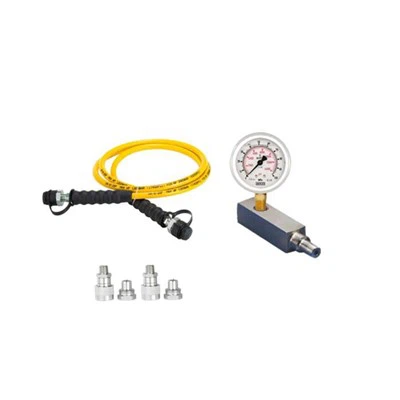
First, let's briefly introduce the hydraulic nut splitter. Our Hydraulic Nut Splitter is a high - performance tool that utilizes hydraulic pressure to generate a large splitting force. It consists of a hydraulic pump, a cylinder, and a splitting blade. When the hydraulic pump is activated, it pumps hydraulic fluid into the cylinder, which then drives the splitting blade to cut through the nut. This method is not only safer than traditional methods like using a torch or a hammer and chisel but also more efficient, reducing the risk of damage to the surrounding equipment and minimizing the time required for nut removal.
Factors Affecting Splitting Time
The splitting time of a nut using a hydraulic nut splitter is influenced by several factors, and nut size is one of the most significant ones. Other factors include nut material, tightness, and the condition of the nut (e.g., whether it is corroded).
Nut Material
Different nut materials have different hardness and toughness, which directly affect the splitting time. For example, nuts made of high - strength alloy steel are more difficult to split compared to those made of mild steel. The harder the material, the more force is required to cut through it, and thus the longer the splitting time.
Nut Tightness
The degree of tightness of the nut is another crucial factor. A nut that is tightly tightened under high torque may deform slightly, making it more difficult to split. In some cases, the internal stress within the nut can cause the splitting blade to encounter more resistance, increasing the splitting time.
Nut Condition
Corroded or rusted nuts are more challenging to split than clean and new nuts. The corrosion layer can harden the surface of the nut and cause the splitting blade to wear out faster. Additionally, the presence of rust can fill the gaps between the nut and the bolt, making it harder for the splitting blade to penetrate the nut.
Splitting Time Variation for Different Nut Sizes
We have conducted a series of tests using our hydraulic nut splitters to measure the splitting time for different nut sizes. The tests were carried out under controlled conditions, with nuts made of the same material, tightened to the same torque, and in a clean and non - corroded state.
Small - Sized Nuts (M12 - M24)
Small - sized nuts typically have a shorter splitting time. Our tests showed that for nuts in the M12 - M24 range, the splitting time generally ranges from 5 to 15 seconds. The relatively small cross - sectional area of these nuts allows the splitting blade to penetrate quickly, and the hydraulic nut splitter can generate sufficient force to cut through them in a short time. These small - sized nuts are commonly used in light - duty applications such as in electrical equipment, small machinery, and some automotive parts.
Medium - Sized Nuts (M27 - M48)
Medium - sized nuts have a moderately longer splitting time compared to small - sized nuts. The splitting time for nuts in the M27 - M48 range usually lies between 15 and 30 seconds. As the nut size increases, the cross - sectional area that the splitting blade needs to cut through also increases, requiring more force and time. Medium - sized nuts are widely used in industrial machinery, construction equipment, and some heavy - duty automotive applications.
Large - Sized Nuts (M52 and above)
Large - sized nuts present the greatest challenge in terms of splitting time. For nuts with a size of M52 and above, the splitting time can exceed 30 seconds and may even reach up to 60 seconds or more in some cases. The large cross - sectional area and the high mass of these nuts demand a significant amount of force from the hydraulic nut splitter. Moreover, the internal stress distribution within large nuts is more complex, which can also contribute to the longer splitting time. Large - sized nuts are commonly used in heavy - industry applications such as bridges, large - scale manufacturing equipment, and offshore platforms.
Choosing the Right Hydraulic Nut Splitter
Selecting the appropriate hydraulic nut splitter for your application is essential to ensure efficient and safe nut removal. Here are some considerations based on nut size:
For Small - Sized Nuts
A compact and lightweight hydraulic nut splitter is sufficient for small - sized nuts. These splitters are easy to handle and can be quickly deployed in various working environments. They are also relatively less expensive and require less maintenance.
For Medium - Sized Nuts
For medium - sized nuts, a hydraulic nut splitter with a higher hydraulic pressure rating and a more robust splitting blade is recommended. This type of splitter should be able to generate enough force to cut through the larger cross - sectional area of the nuts within a reasonable time.
For Large - Sized Nuts
When dealing with large - sized nuts, a heavy - duty hydraulic nut splitter with a high - capacity hydraulic pump and a durable splitting blade is necessary. These splitters are designed to handle the high forces required for splitting large nuts and are often equipped with advanced features such as adjustable splitting force and safety valves.
Related Tools for Industrial Applications
In addition to hydraulic nut splitters, we also offer a range of related tools for industrial applications. For example, our Integrated Hydraulic Flange Spreader is a versatile tool used for separating flanges. It can be used in conjunction with a hydraulic nut splitter in flange joint maintenance tasks.
Our Hydraulic Flange Alignment Tool is another useful tool that helps ensure accurate alignment of flanges during installation, preventing leaks and prolonging the service life of the flange joints.
The Hydraulic Wedge Spreader is designed for applications where a large spreading force is required, such as in the disassembly of large - scale machinery. And our Flange Spreader provides a reliable solution for separating flanges in different industrial scenarios.
Conclusion and Call to Action
In conclusion, the splitting time of nuts using a hydraulic nut splitter varies significantly depending on nut size, along with other factors such as nut material, tightness, and condition. By understanding these factors, you can better choose the right hydraulic nut splitter for your specific application, improving work efficiency and reducing labor costs.
If you are in the market for a high - quality hydraulic nut splitter or any of our related industrial tools, we invite you to reach out to us. Our team of experts is ready to provide you with detailed product information, technical support, and tailored solutions based on your requirements. Don't hesitate to contact us for more information and start discussing your procurement needs today.
References
- "Hydraulic Tools Handbook", Industrial Publishing Company, 2018
- "Nut Removal Techniques in Industrial Maintenance", Journal of Industrial Engineering, Vol. 15, 2020