

Hey there! As a supplier of Mobile Hydraulic Jacks, I'm super stoked to chat with you about the technical specs of these nifty tools. Mobile hydraulic jacks are essential in various industries, from automotive repair to heavy machinery maintenance. They're designed to lift heavy loads with ease, making them a must - have for any professional or DIY enthusiast.
Let's start with the basics. A Mobile Hydraulic Jack Mobile Hydraulic Jack operates on the principle of Pascal's Law. This law states that when pressure is applied to a confined fluid, the pressure change occurs throughout the entire fluid. In the case of a hydraulic jack, this means that a small force applied to a small piston can generate a large force on a larger piston, allowing you to lift heavy objects.
Lifting Capacity
One of the most important technical specifications of a mobile hydraulic jack is its lifting capacity. This is measured in tons and indicates the maximum weight the jack can safely lift. Our range of mobile hydraulic jacks comes with different lifting capacities, starting from as low as 1 ton for light - duty applications, like changing a car tire, to as high as 100 tons for heavy - duty industrial use. For instance, if you're working on a small sedan, a 1 - 2 ton jack should do the trick. But if you're dealing with large trucks or industrial machinery, you'll need a jack with a much higher lifting capacity.
Stroke Length
The stroke length is another crucial spec. It refers to the maximum distance the jack can lift the load. A longer stroke length means the jack can lift the load to a greater height. This is important, especially when you need to work under the lifted object. Our mobile hydraulic jacks have stroke lengths that vary depending on the model. Some have a short stroke length of around 100 - 200 mm, which is suitable for quick tire changes. Others have a longer stroke length of up to 500 mm or more, perfect for more in - depth repairs where you need more clearance.
Pumping Mechanism
The pumping mechanism of a mobile hydraulic jack determines how easily you can lift the load. There are two main types: manual and hydraulic. Manual pumping requires you to physically pump a handle to build up pressure in the hydraulic system. It's simple and reliable, but it can be a bit tiring, especially when lifting heavy loads. On the other hand, hydraulic pumping systems use a hydraulic pump to generate pressure. These are often more efficient and require less effort from the user. Our mobile hydraulic jacks come with both types of pumping mechanisms, so you can choose the one that suits your needs best.
Construction and Materials
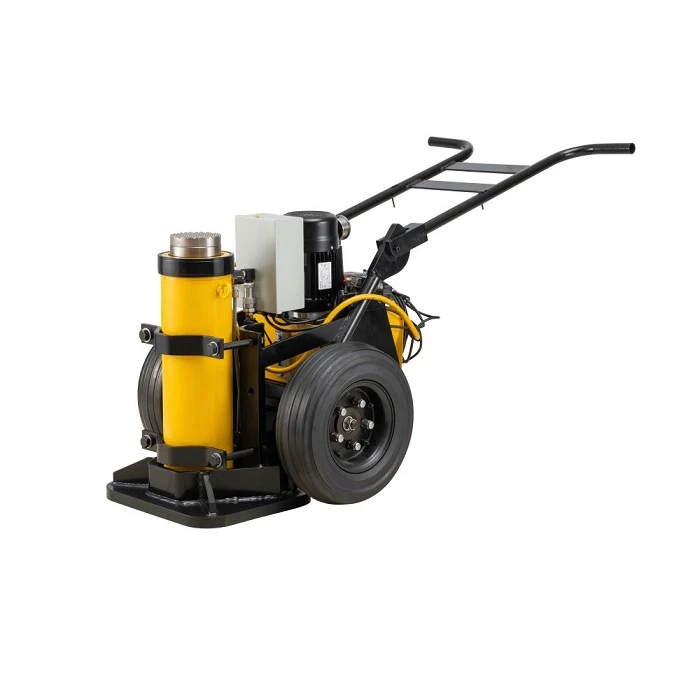
The construction and materials used in a mobile hydraulic jack play a big role in its durability and performance. Our jacks are made from high - quality steel, which provides excellent strength and resistance to wear and tear. The hydraulic cylinders are precision - engineered to ensure smooth operation and prevent leaks. The base of the jack is wide and stable, providing a solid foundation for lifting heavy loads. Additionally, the surface of the jack is often coated to protect it from corrosion, which is especially important if the jack is used in harsh environments.
Mobility Features
As the name suggests, mobile hydraulic jacks are designed to be easily moved around. They typically come with wheels or casters, which make it convenient to transport the jack from one location to another. Some of our models have swivel casters, which allow for easy maneuverability, even in tight spaces. The wheels are made from durable materials that can withstand heavy loads and rough surfaces.
Safety Features
Safety is always a top priority when it comes to using hydraulic jacks. Our mobile hydraulic jacks are equipped with several safety features to prevent accidents. One of the most important safety features is the overload valve. This valve is designed to release pressure if the load exceeds the jack's maximum capacity, preventing damage to the jack and ensuring the safety of the user. Additionally, many of our jacks have a locking mechanism that keeps the load in place once it's lifted, preventing it from accidentally falling.
Comparison with Other Hydraulic Jacks
It's also worth comparing mobile hydraulic jacks with other types of hydraulic jacks, like the Hydraulic Claw Jack and Hydraulic Pusher. Hydraulic claw jacks are designed for specific applications, such as lifting objects at an angle or in tight spaces. They have a unique claw - like design that allows them to grip the object securely. Hydraulic pushers, on the other hand, are used for pushing or pulling heavy objects, rather than lifting them. While these types of jacks have their own advantages, mobile hydraulic jacks offer more versatility in terms of lifting and mobility.

Maintenance and Care
To ensure the longevity and optimal performance of your mobile hydraulic jack, proper maintenance and care are essential. Regularly check the hydraulic fluid level and top it up if necessary. Keep the jack clean and free from dirt and debris, as these can cause damage to the hydraulic system. Inspect the jack for any signs of wear or damage, such as leaks or cracks, and replace any worn - out parts immediately.
In conclusion, mobile hydraulic jacks are incredibly useful tools with a wide range of applications. Their technical specifications, such as lifting capacity, stroke length, pumping mechanism, and safety features, determine their performance and suitability for different tasks. Whether you're a professional mechanic or a DIY enthusiast, having a high - quality mobile hydraulic jack in your toolkit is a smart investment.
If you're interested in purchasing a mobile hydraulic jack or have any questions about our products, feel free to reach out. We're here to help you find the perfect jack for your needs. Let's get the job done safely and efficiently!
References
- Engineering textbooks on hydraulics
- Manufacturer's product manuals for mobile hydraulic jacks


