

Hey there! As a supplier of hydraulic presses, I often get asked about how to test the performance of these powerful machines. In this blog post, I'm gonna share with you some practical ways to test the performance of a hydraulic press.
Understanding the Basics
Before we dive into the testing process, it's important to have a basic understanding of how a hydraulic press works. A hydraulic press uses hydraulic cylinders to generate a compressive force. It operates on Pascal's principle, which states that when pressure is applied to a confined fluid, the pressure change occurs throughout the entire fluid.
The main components of a hydraulic press include the hydraulic pump, cylinders, pistons, and a control system. The hydraulic pump is responsible for generating the pressure, which is then transferred to the cylinders. The pistons inside the cylinders move under the influence of the pressure, creating the force needed for pressing operations.
Pre - test Preparations
First things first, you need to make sure the hydraulic press is in a safe and stable working environment. Check the machine for any visible damages, such as leaks in the hydraulic hoses or cracks in the frame. Inspect the hydraulic fluid level. Low fluid levels can lead to poor performance and even damage the pump.
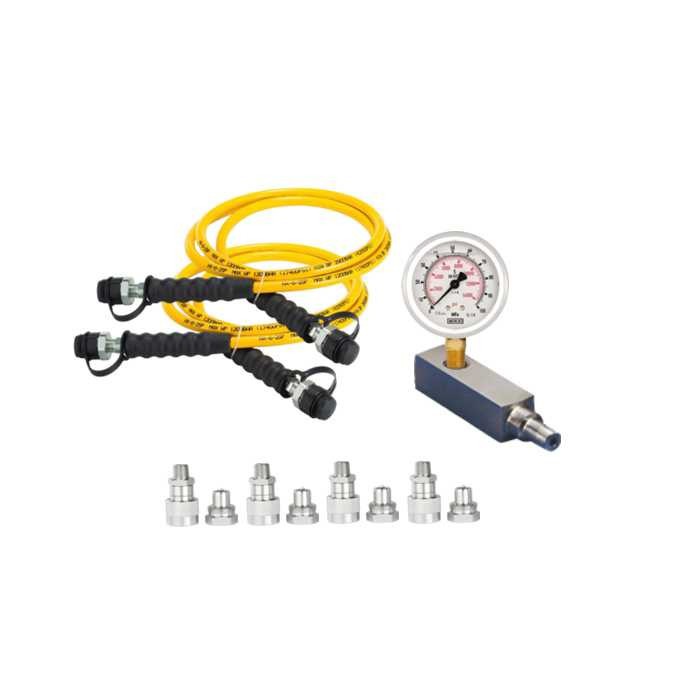
Also, ensure that all the safety guards are in place. Safety should always be your top priority when working with hydraulic presses. You'll also need to gather the necessary testing tools, like pressure gauges and flow meters. You can find some great Gauge Accessories on our website that are perfect for this kind of testing.
Pressure Testing
One of the most crucial aspects of testing a hydraulic press is checking the pressure. You can use a pressure gauge to measure the pressure at different points in the hydraulic system. Start by connecting the pressure gauge to the appropriate ports on the pump and cylinders.
Turn on the hydraulic press and gradually increase the pressure. Observe the pressure reading on the gauge. Compare it with the manufacturer's specifications. If the pressure is too low, it could indicate a problem with the pump, a leak in the system, or a clogged filter. On the other hand, if the pressure is too high, it might put excessive stress on the components and lead to premature failure.
Force Output Testing
The force output of a hydraulic press is what really matters in most applications. To test the force output, you can use a load cell. A load cell is a device that measures force and converts it into an electrical signal.
Place the load cell between the ram of the hydraulic press and the workpiece. Activate the press and gradually increase the pressure until the desired force is applied. Record the force reading from the load cell. Compare this reading with the rated force of the hydraulic press. If the measured force is significantly lower than the rated force, there could be issues with the hydraulic system or the mechanical components.
Speed and Cycle Time Testing
The speed at which the hydraulic press operates and its cycle time are also important performance indicators. Cycle time refers to the time it takes for the press to complete one full cycle of operation, including the forward stroke, dwell time, and return stroke.
You can use a stopwatch to measure the cycle time. Start the stopwatch when the press begins its forward stroke and stop it when it returns to its original position. Repeat this process several times to get an accurate average.
To test the speed of the ram, you can mark a known distance on the ram and use a high - speed camera or a motion sensor. Measure the time it takes for the ram to travel the marked distance. This will give you an idea of the ram's speed. If the speed is too slow, it could be due to a lack of hydraulic fluid flow or a problem with the control valves.
Leakage Testing
Leakage in a hydraulic press can lead to a loss of pressure and reduced performance. To check for leaks, you can visually inspect the hydraulic hoses, connections, and cylinders. Look for any signs of fluid dripping or pooling.
You can also use a leak detection solution. Spray the solution on the suspected areas, and if there is a leak, bubbles will form. Pay special attention to the seals around the pistons and the connections between the hoses and the components. Leaks can be caused by worn - out seals, loose connections, or damaged hoses. You can find a wide range of Hydraulic Accessories on our site, including replacement seals and hoses, to fix these issues.
Temperature Testing
The temperature of the hydraulic fluid is another important factor. High fluid temperatures can cause the fluid to break down, reduce its viscosity, and lead to increased wear on the components.
You can use an infrared thermometer to measure the temperature of the hydraulic fluid in the reservoir. The normal operating temperature of hydraulic fluid is usually between 40°C and 60°C. If the temperature is consistently higher than this range, it could be due to excessive friction in the system, a clogged cooler, or overloading of the press.
Noise and Vibration Testing
Unusual noise and vibration can indicate problems with the hydraulic press. Listen for any rattling, banging, or screeching sounds when the press is in operation. Excessive noise can be caused by loose components, worn - out bearings, or cavitation in the hydraulic pump.
To check for vibration, you can use a vibration sensor. Mount the sensor on the frame of the hydraulic press and measure the vibration levels. High vibration levels can lead to premature wear and tear of the components and can also affect the quality of the pressing operation.
Post - test Analysis
After completing all the tests, it's time to analyze the results. Make a list of any issues you've identified, such as low pressure, leaks, or abnormal noise. Compare the test results with the manufacturer's specifications.
If you find any problems, you'll need to take appropriate action. This could involve replacing worn - out components, tightening loose connections, or flushing and replacing the hydraulic fluid. You can also refer to the machine's manual for troubleshooting guidance.
Conclusion
Testing the performance of a hydraulic press is an essential part of ensuring its reliability and efficiency. By following these steps, you can identify and address any issues before they cause major problems.
At our company, we're not only a supplier of high - quality hydraulic presses but also offer a wide range of Hydraulic Accessories and Combined Handing Tank to meet all your hydraulic needs.

If you're in the market for a new hydraulic press or need to replace some parts, don't hesitate to reach out to us. We're here to help you make the right choice and ensure that your hydraulic press performs at its best. Contact us today to start a conversation about your requirements!
References
- "Hydraulic Systems: Design, Installation, and Maintenance" by John Doe
- "Practical Guide to Hydraulic Presses" by Jane Smith


