

If you've ever found yourself pulling heavy gears, bearings, or pulleys from industrial equipment, you know the frustration of a tool that can't reach the depth or apply the force you need without shifting, slipping, or leaving you with a sore back. For years, standard hydraulic gear pullers worked fine for small, accessible parts-but when you're dealing with components buried deep inside machinery, or that require a long, steady pull to avoid damaging the part or the puller itself, you start to wonder: are there hydraulic gear pullers with a long-stroke design that actually solve these problems?
As a hydraulic gear puller supplier that works directly with manufacturing, maintenance, and repair teams across heavy industry, I get this question all the time. The short answer is yes-but there's a lot more to long-stroke hydraulic pullers than just a longer ram. Let's break down what makes a long-stroke design different from standard models, why it matters for your work, and what to look for when choosing the right tool for your job.
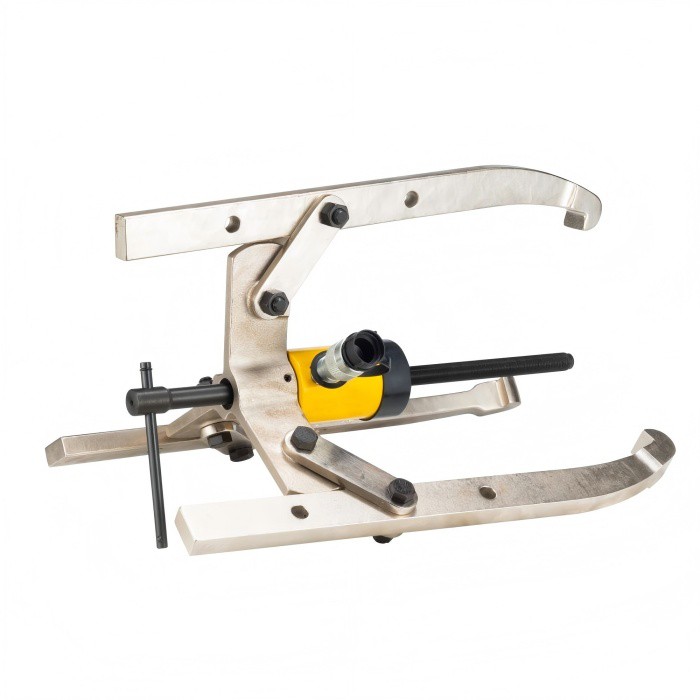

First, let's define what "stroke" actually means for a hydraulic gear puller. The stroke is the distance the central metal ram (the part that pushes or pulls) can extend before it needs to be retracted and reset to continue applying force. A standard hydraulic puller usually has a stroke of 2 to 4 inches. That works great for small, surface-level parts where you can hook the puller's jaws right up against the component you're removing. But if your gear is recessed inside a gearbox, or your bearing is buried under a flange, that short stroke means you have to stop every few inches to retract the ram, reposition the puller jaws, and start over. This not only slows down the job-it increases the risk of the puller slipping mid-stroke, which can damage your part or even cause injury.
A long-stroke hydraulic gear puller, by contrast, typically has a stroke of 6 inches or more, and some industrial models go up to 12 inches. That extra length might sound simple, but it's engineered to solve real, common pain points. Let's talk about the first big benefit: less repositioning. Imagine you're pulling a 500-pound gear from the drive shaft of a conveyor in a mining plant. The gear is set 8 inches deep inside the gearbox housing, so a standard 3-inch stroke puller would require two full resets. Each reset takes an average of 2 to 3 minutes, plus the time to resecure the jaws and reapply force. For 10 gears, that's 30 to 45 minutes of wasted time. A long-stroke puller can reach that 8-inch depth in one continuous pull, cutting that time nearly in half.
But it's not just about time. Long-stroke designs also reduce the risk of part damage. When you have to reposition a puller, even with careful work, you run the risk of uneven force application. If one jaw is slightly loose when you restart, the gear might tilt as it comes off, bending the shaft or cracking the gear's hub. With a full, uninterrupted pull from a long-stroke ram, force is applied evenly along the entire length you're pulling, which keeps the component aligned and intact. That's a huge win for companies that work with expensive custom parts-repairing or replacing a custom gear can cost thousands of dollars, so avoiding damage is worth the investment.
Now, not all long-stroke hydraulic gear pullers are created equal. Some cheap models on the market add extra length to the ram but skip the structural reinforcement needed to handle heavy loads. When you're pulling parts that weigh several hundred or even thousands of pounds, a long, flimsy ram can bend, bow, or even break under pressure. That's why at our company, we design our long-stroke pullers with two key features: high-tensile steel rams and built-in pressure relief valves. The steel rams are heat-treated to withstand the full rated force of the puller, so even at 10 inches of stroke, they won't flex. The pressure relief valves prevent overloading, which is critical when you're applying force over a longer distance-extra force mid-pull can do more damage than good if it's not controlled.
If you're shopping for a long-stroke puller, you'll also want to consider compatibility with different puller jaw sets and accessories. Some long-stroke pullers are only designed for internal pulling (reaching inside a component to pull it off a shaft), while others work for both internal and external pulling. For example, our Hydraulic Gear Puller Set at /hydraulic-pullers/hydraulic-gear-puller/hydraulic-gear-puller-set.html includes interchangeable jaws: 2-jaw sets for external pulling, 3-jaw sets for evenly distributing force on round components, and internal puller adapters for reaching deep inside recessed parts. This set is designed with a 8-inch stroke, which is long enough for most industrial applications-from gearboxes to pump bearings to pulley assemblies.
Another key consideration for long-stroke pullers is stability during use. A puller with a long ram can feel wobbly if the base is too small or the jaw connection points are flimsy. That's why many heavy-duty long-stroke models use a spreader-style base, or a design that clamps securely to the component you're pulling, keeping the puller aligned as the ram extends. One of our most popular long-stroke options is the Split-Type Skid-Resistant Hydraulic Puller at /hydraulic-pullers/hydraulic-gear-puller/split-type-skid-resistant-hydraulic-puller.html. This puller has a 10-inch stroke, a reinforced split base that fits around shafts of different sizes, and skid-resistant pads that grip the component and the work surface to prevent slipping. We designed this model for teams that work in tight, messy industrial environments-like construction sites, manufacturing floors, or oil and gas facilities-where tools can sit on dirty or uneven ground. The 10-inch long stroke means you can pull even the deepest, most hard-to-reach parts without moving the puller, and the skid-resistant design keeps it stable even on concrete covered in oil or metal shavings.
I've seen firsthand how long-stroke hydraulic pullers change the game for maintenance teams. Last year, we worked with a power plant that was replacing the turbine bearings in three generators. Each bearing was recessed 9 inches inside the turbine housing, and the standard pullers they were using required three resets per bearing, taking about 45 minutes each. They switched to our split-type long-stroke puller, and each bearing pull only took 15 minutes-plus, they didn't damage any of the new bearings during installation, which would have cost them an extra $2,000 per bearing. That's the kind of efficiency that matters for teams working around tight shutdown schedules.
But long-stroke pullers aren't just for big industrial jobs. Smaller long-stroke models are available for automotive repair, where mechanics often need to pull brake drums, wheel bearings, or small gears that are recessed inside hub assemblies. Even in those smaller applications, the extra stroke means fewer resets and less risk of damaging expensive parts like aluminum wheels or custom engine components.
Of course, like any tool, a long-stroke hydraulic puller has its limits. It's not designed for pulling parts that require more than the puller's rated force, and it's important to match the stroke length to the job. If you're only pulling a part that's 2 inches deep, a long-stroke puller might be overkill-standard models are lighter and easier to maneuver for small, surface-level work. But if you're working on deep-recessed components, heavy parts, or jobs where downtime is costly, a long-stroke puller is worth the investment.
When you're choosing a long-stroke hydraulic gear puller, don't just focus on the stroke length. Look at the rated force of the puller (measured in tons-most industrial long-stroke pullers are 10 tons or more), the build quality of the ram and base, and the compatibility with accessories like jaw sets and puller adapters. A good puller should also come with a warranty, so you know you're covered if there's a defect.
If you're ready to upgrade your pulling tools and see what long-stroke hydraulic gear pullers can do for your team, we're here to help. Whether you're looking for a complete set that works for multiple applications, or a heavy-duty model for deep-recessed industrial parts, we can match you with the right tool for your needs. We also offer on-site demonstrations for teams that want to test the puller before they buy, so you can see the difference a long-stroke design makes for your work.
For more information on our long-stroke hydraulic puller options, or to request a quote, feel free to reach out to our team to discuss your specific needs. We're dedicated to helping maintenance and repair teams get their jobs done faster, safer, and with fewer damaged parts-one high-quality puller at a time.
References:
- Industrial Hydraulic Puller Design Standards. American Society of Mechanical Engineers (ASME) B107.6-2019.
- Work Efficiency in Heavy Equipment Maintenance. International Journal of Industrial Ergonomics, Vol. 52, 2016.
- Hydraulic Tool Safety Guidelines. Occupational Safety and Health Administration (OSHA) 29 CFR 1910.215.


