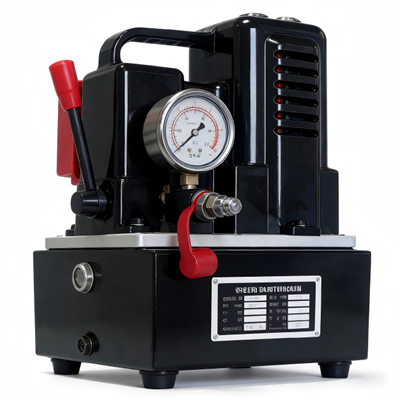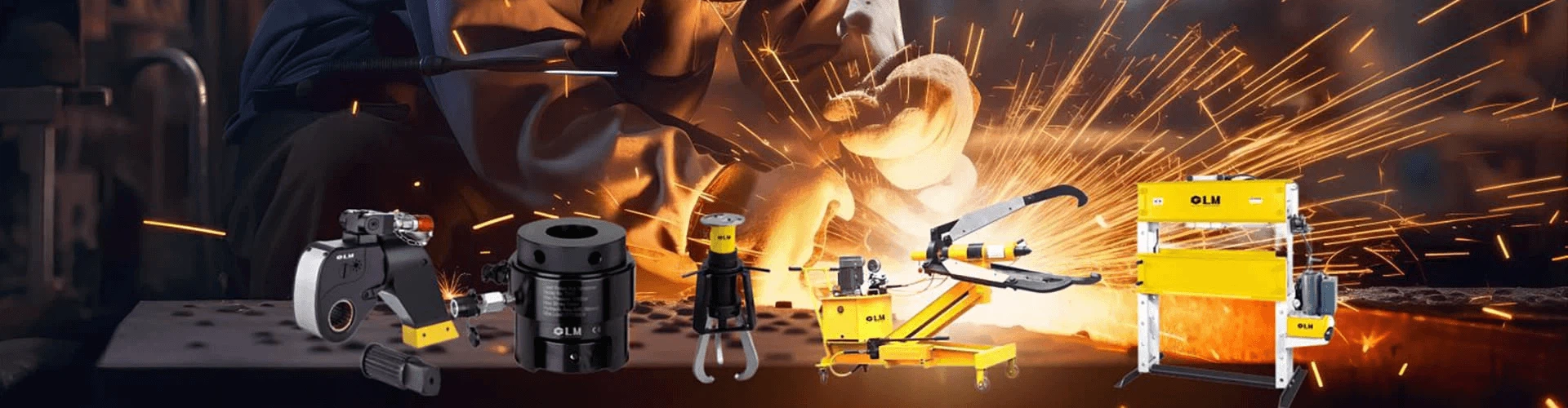
Synchronous lifting systems and heavy lifting solutions have emerged as game-changing technologies in modern engineering, offering unparalleled precision, safety, and adaptability for demanding industrial applications. These systems leverage advanced control mechanisms and robust mechanical designs to synchronize multiple lifting points or actuators, ensuring uniform force distribution and coordinated motion. This article explores how these systems operate, their critical applications across industries, and their transformative advantages over conventional lifting methods.
What Are Synchronous Lifting Systems and How Do They Work?
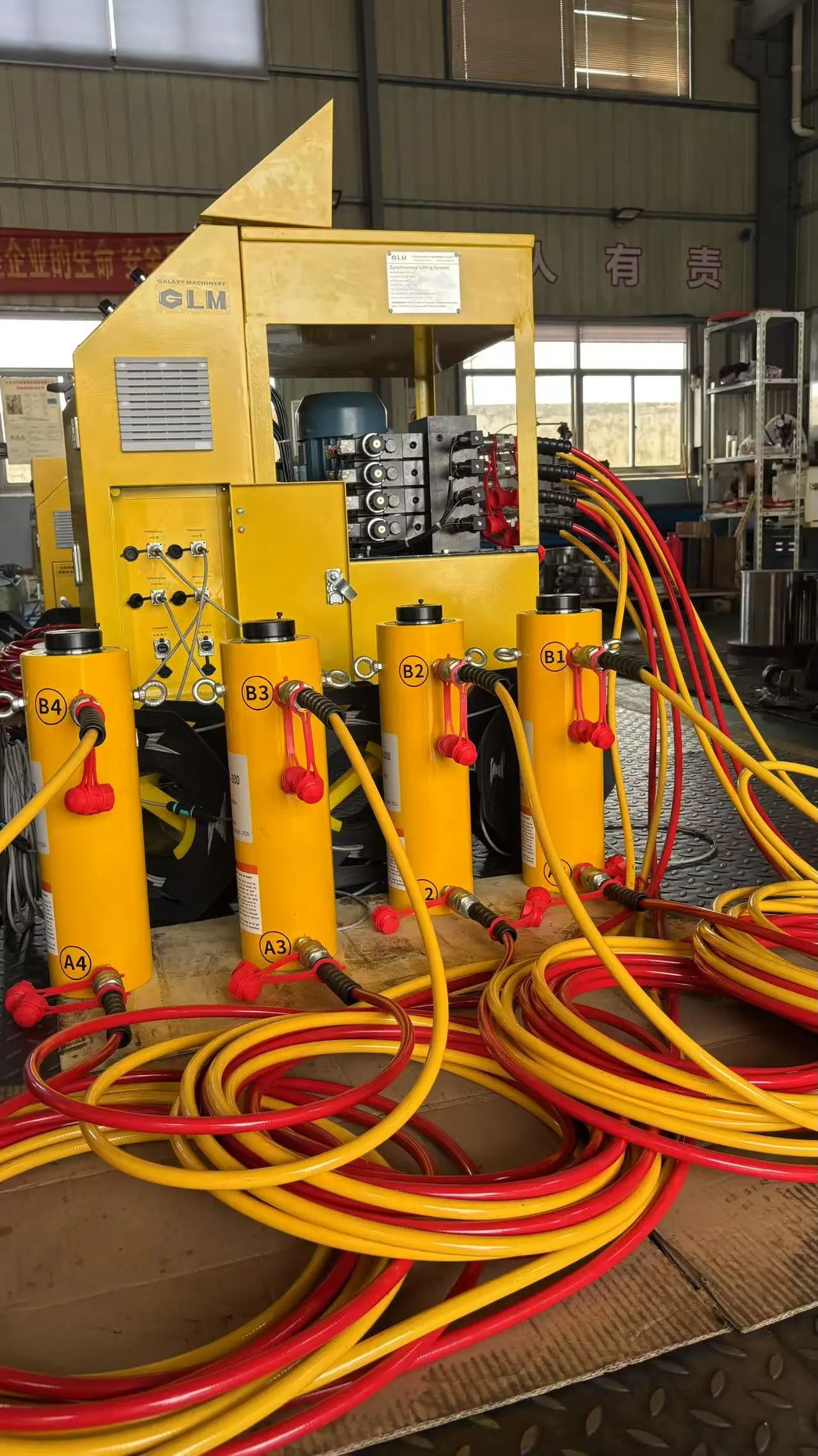
Synchronous lifting systems are engineered to lift or position heavy loads with micron-level accuracy by synchronizing the movement of multiple hydraulic cylinders, electric actuators, or mechanical components. Unlike traditional single-point lifting, these systems utilize distributed control architectures, real-time feedback loops, and intelligent algorithms to maintain equilibrium and alignment during operations.
Key Components and Mechanisms:
1.Hydraulic or Electric Actuators: High-precision actuators convert hydraulic pressure or electrical energy into controlled linear motion. For example, Galaxy's CLRG series hydraulic cylinders integrate pressure sensors and PLC controllers to adjust force dynamically .
2.Control Systems: Advanced controllers, such as Linear Auto-Disturbance Rejection Controllers (LADRC) optimized by Chaos Particle Swarm Optimization (CPSO), enhance synchronization accuracy by minimizing overshoot and reducing synchronization errors to <0.45 cm in high-speed train wing applications .
3.Synchronization Protocols: Cross-coupled feedback loops ensure real-time adjustments. In modular lifting systems like those used in aerospace, position errors from one actuator are fed back to others, enabling uniform motion .
4.Safety Features: Built-in overload protection, automatic braking, and thermal monitoring prevent system failures. For instance, HELI's electric forklifts use active braking and intelligent speed limiters to enhance stability .
Design Innovations:
Modular Architecture: Components like telescopic booms and foldable trusses (e.g., Guangzhou ICTC's stage trusses) allow rapid assembly and customization for diverse load capacities .
Energy Efficiency: Regenerative braking systems and hydraulic power recovery reduce energy consumption by up to 30% .
Common Industries Utilizing Synchronous Lifting Systems
These systems are indispensable in sectors requiring heavy load manipulation and precision:
1.Construction and Infrastructure:
Bridge and High-Rise Assembly: Synchronized hydraulic jacks lift multi-ton steel girders with millimeter precision. For example, Liebherr's Sycratronic system ensures stability during skyscraper construction .
Tunnel Boring: Modular jacks stabilize massive machinery in underground projects.
2.Marine and Offshore Engineering:
Shipbuilding: Hydraulic synchronization lifts ship sections in dry docks. Lamprell's offshore platforms use Galaxy's CLRG cylinders for module weighing and alignment .
Wind Turbine Installation: Floating cranes with synchronized winches position 100+ ton turbine blades offshore.
3.Automotive and Aerospace:
Assembly Lines: Robotic arms with CPSO-LADRC controllers adjust lift angles by 0.1° for precision in car body welding .
Aircraft Maintenance: Dual-motor systems tilt wings during repairs without destabilizing the fuselage.
4.Energy and Utilities:
Nuclear Reactor Components: Redundant actuator networks ensure safe handling of radioactive materials.
Solar Farm Installation: Solar panel arrays are lifted synchronously to avoid structural stress.
Advantages Over Traditional Lifting Methods
Synchronous lifting systems outperform conventional hydraulic or mechanical solutions in critical metrics:
1.Enhanced Precision:
Minimizes synchronization errors (e.g., <5% deviation in actuator failures ).
Achieves ±0.5 mm repeatability in aerospace component positioning .
2.Scalability and Modularity:
Systems like Galaxy's Jack-Up adapt from 125-ton to 750-ton capacities using standardized modules, reducing deployment time by 40% .
3.Safety and Reliability:
Active cooling systems and fault-tolerant designs (e.g., CPSO algorithms) prevent overheating and actuator failures .
Redundant sensors and backup hydraulics ensure uninterrupted operations.
4.Cost Efficiency:
Energy recovery systems cut operational costs by 25–35% .
Reduced maintenance needs (e.g., maintenance-free wet brakes in HELI forklifts ).
5.Environmental Compliance:
Electric actuators eliminate diesel emissions, aligning with EU Stage V and China IV standards.

Future Trends and Innovations
The evolution of synchronous lifting systems is driven by:
AI Integration: Predictive maintenance algorithms analyze sensor data to preempt failures.
Hybrid Power Systems: Combining battery storage with solar energy for off-grid applications.
Digital Twins: Virtual replicas of lifting systems optimize real-world performance through real-time simulations .
Conclusion
Synchronous lifting systems redefine industrial capabilities by merging precision, safety, and adaptability. From erecting skyscrapers to deploying offshore wind farms, these technologies address the growing demand for smarter, greener engineering solutions. For businesses seeking to future-proof their operations, adopting these systems isn't just an upgrade-it's a strategic imperative.