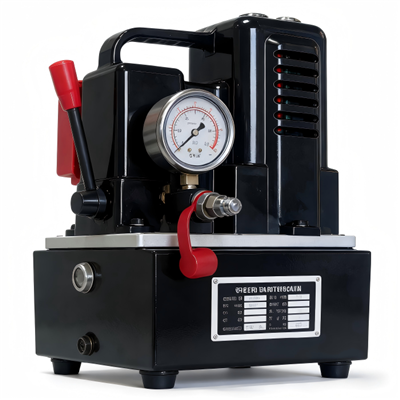
A standard synchronous lifting system consists of a high‑pressure hydraulic power unit, multiple hydraulic lifting cylinders, high‑pressure hoses and an integrated electronic control system. Most industrial‑grade systems run at 700 bar maximum working pressure, the mainstream pressure rating for heavy‑duty hydraulic jacking tools. Such systems can drive from 2 up to 120 lifting points simultaneously, covering small‑scale 2‑point lifting all the way to large‑scale projects with over one hundred jacking positions.
Precision is the most critical performance indicator. Mature synchronous lifting solutions can achieve ±0.5 mm full‑stroke accuracy. This tight tolerance ensures every lifting point moves at nearly identical displacement, avoiding local stress concentration, component deformation or safety hazards caused by uneven height among jacks.
Two mainstream control principles are widely adopted in the industry: variable‑frequency synchronous control and pulse synchronous control. Variable‑frequency solutions adjust motor output flow dynamically, delivering stable continuous lifting speed, suitable for long‑duration jacking and heavy‑weight relocation. Pulse‑synchronous control outputs intermittent hydraulic pulses, ideal for scenarios requiring frequent start‑stop and fine‑tuned micro‑adjustment.
Modern synchronous lifting units adopt PLC‑based automatic control. Built‑in high‑precision sensors collect real‑time displacement and pressure data from each cylinder. The high‑pressure balance valve circuit maintains load stability even under sudden pressure fluctuations. Practical on‑site functions include synchronous jack‑up, synchronous landing, automatic zero‑finding, and adjustable oil flow for independent lifting‑speed control for each cylinder. These features lower operational difficulty and reduce manual‑operation risks.
The application scope keeps expanding across engineering fields:
Bridge engineering: bridge maintenance, segmental‑bridge jacking and box‑girder relocation, temporary‑support load transfer
Construction: roof lifting, building reconstruction, heavy‑component installation
Foundation engineering: static pile‑loading tests and foundation‑support adjustment
Special industries: shipbuilding, railway and subway construction, heavy‑equipment weighing and relocation.
System configurations vary greatly for different‑size projects. Key configurable parameters include hydraulic flow (0.4 L/min‑2.5 L/min), motor power and oil‑tank volume. Engineers select flow and power according to lifting speed requirements and the number of lifting points. Custom‑adjusted power‑unit dimensions are common for limited‑space job‑sites.
Safety deserves special attention in synchronous lifting work. Operators must match system pressure, cylinder tonnage and hose pressure rating. All high‑pressure components shall be rated for 700 bar working pressure. Before formal jacking, zero‑point calibration and no‑load test runs are necessary to verify sensor feedback and synchronous performance.
As global infrastructure construction continues advancing, the demand for high‑accuracy multi‑point heavy‑lifting will keep growing. Synchronous hydraulic lifting technology will play an increasingly important role in bridge renovation, industrial‑plant upgrading and large‑equipment relocation projects.