Flange separation is one of the most frequent and most underestimated tasks in plant maintenance. A seized flange during a valve change or gasket replacement can stall an entire shutdown schedule, and forcing it with hammers or pry bars risks damaging the flange face, the gasket seating surface and the piping system. Purpose built flange spreaders solve this problem by inserting a thin wedge into the flange gap and applying controlled, parallel force until the joint opens safely.
The market now offers several distinct families of tools, and choosing correctly depends on flange size, available clearance, required spreading force and whether the site prefers hydraulic or mechanical operation. This article reviews the main product families, their individual strengths, the working scenarios they suit best, and the direction the industry is heading.
1. Key Selection Criteria
Before comparing models, buyers should confirm six parameters.
Tip clearance. The gap available between flange faces is often only a few millimeters. Tools requiring 6 mm or even 2 mm can be used where conventional wedges cannot enter.
Maximum spreading force. This must exceed the force required to break the joint, with a safety margin. Forces are quoted in tons or kN, and 1 ton equals approximately 10 kN.
Maximum spread distance. The tool must open the flange wide enough for gasket removal or insertion, typically 60 mm to 105 mm, and up to 216 mm for larger raised face joints.
Flange and bolt size range. Jaw widths, stud size and flange thickness determine whether the tool can be positioned correctly. Adjustable jaw designs cover a wider range of pipe classes with fewer tools.
Drive type. Hydraulic tools deliver higher force with less operator effort and suit 700 bar systems; mechanical tools are self contained, lighter and ideal for locations without a pump.
Weight and portability. Maintenance crews frequently work at height, in confined spaces or offshore. Tools between 5 kg and 9 kg are the practical sweet spot for one person handling.
2. Product Families and Their Advantages
FSH Series Hydraulic Wedge Spreader is the workhorse of hydraulic flange separation. Its integrated wedge concept produces friction free, smooth and parallel wedge movement, which eliminates flange damage and spreading arm failure. The unique interlocking wedge design requires no first step bending and removes the risk of slipping out of the joint, while the stepped spreader arm allows each stage to spread under full load. With a 6 mm tip clearance, a maximum spread of 80 mm, spreading force from 14 to 28 tons and 700 bar operating pressure, it handles the majority of routine refinery and pipeline joints. Few moving parts mean durability and low maintenance, and each unit ships with a safety block, stepped blocks, a ratchet spanner and quick coupling fittings in a moulded case. Typical weight is 7.1 kg with 78 cm³ oil capacity.
FSM Series Mechanical Wedge Spreader covers the same 80 mm spread and 6 mm tip clearance at 8 to 16 tons without any hydraulic connection. Its mechanical automatic return design and large step distance deliver substantial output from the very first step, and at only 6.5 kg it is easy to carry into remote or unpowered locations. A manual return closes the tool when the flange is released. This is the natural choice for field service teams, small workshops, and jobs where routing a high pressure hose is impractical.
VLW Series Hydraulic Vertical Lifting Wedge Spreader addresses a different problem: vertical positioning rather than pure separation. The VLW-16 delivers 16 tons (157 kN) of lifting force at 700 bar, with a 21 mm lifting stroke, 10 mm tip clearance and up to 81.5 mm maximum spread. Its straight vertical lifting action, single acting spring return cylinder and interlocking wedge design make it valuable for raising and aligning flanges, supporting pipe sections during bolt removal, and correcting misalignment before gasket installation. The optional stepped block increases lifting height by a further 30 mm, and a safety block is included as standard. Weight is 9.0 kg with 78 cm³ oil capacity.
SWI Series Flange Spreader is the high reach option for large joint openings. With 240 kN spreading force, 6 mm tip clearance, 103.5 mm maximum spreading distance and a 60 mm jaw width, it opens joints that smaller wedges cannot. The practical design details matter on site: a rotating handle that keeps the tool vertical or horizontal as required, a removable handle for tight access, a rotating lanyard connection point, a rotating 90 degree joint, and a special scale for visual inspection of extension stroke. External hydraulic and integral hydraulic versions are available at 6.4 kg and 8.5 kg respectively, and the factory offers matched kits, either one tool with a sealed single port hand pump and gauge, or two tools with a twin port pump, hoses, elbows, safety blocks, stepped blocks, lanyards and a moulded case.
FS Series Hydraulic Flange Spreader is built for adjustable, wide range coverage. It uses single acting, spring return RC series cylinders for fast, trouble free operation, and its adjustable jaw widths from 70 mm to 216 mm let one tool serve a broad spread of pipe sizes and flange standards. The FS-56 handles 5 tons with 70 mm maximum spread at 11.5 kg, while the FS-109 handles 10 tons with 216 mm maximum spread at 18.1 kg. The ergonomic, lightweight frame keeps setup simple even on larger joints.
MG Series Hydraulic Flange Spreader is the compact specialist. The MG7TM produces 6.8 tons (68 kN) of separation output with only a 2 mm inserting clearance and weighs just 5 kg. Its reversible structure extends the range of applicable flanges, and the unique double angle wedge cone generates greater separation without losing effective separation distance. Rust proof construction and a design that avoids environmental pollution make it suitable for clean environments, food and pharmaceutical plants, and confined space work where every millimeter of access counts.
3. Application Scenarios
Oil and gas, refining and petrochemical plants. Gasket replacement, valve and heat exchanger maintenance, and turnaround work on standard raised face joints, where FSH and SWI tools dominate.
Power generation. Steam line and condenser flange work during scheduled outages, often combined with bolt tensioning and torque wrench operations.
Pipeline construction and repair. Field joints where mechanical FSM tools are preferred for their independence from power supply.
Offshore and marine. Lightweight tools with lanyards and carry cases, where dropped tools are a serious hazard and deck space is limited.
Vertical and alignment work. VLW spreaders for lifting, positioning and alignment of flange faces before bolting.
Confined and low clearance locations. MG series with 2 mm inserting clearance, and FSM or FSH tools in tight pipe racks.
General industry, steel, water treatment and shipbuilding. Routine maintenance where a single adjustable FS series tool covers many flange sizes.
4. Pump, Hose and Accessory Matching
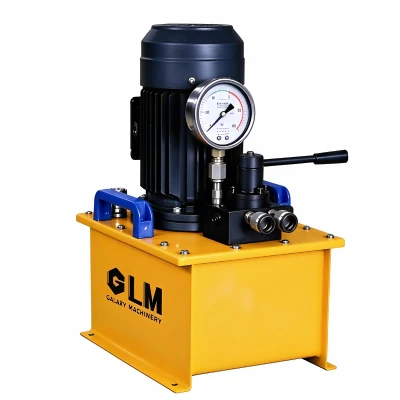
Hydraulic spreaders are only as effective as the power source behind them. For single tool operation, a sealed single port hand pump with gauge is sufficient and keeps the setup compact. For two tool operations, or where cycle time matters, a twin port pump allows simultaneous or sequential control. High pressure hoses rated to 700 bar, typically 2 m with a 90 degree elbow, should be selected together with the tool so that fittings, couplings and dust caps are compatible. Safety blocks and stepped blocks are not optional extras; they are the components that prevent the wedge from being ejected under load and that extend usable spread in controlled increments.
5. Industry Outlook
Several trends are reshaping this category.
Growing MRO demand. Aging refinery, pipeline and power infrastructure across mature markets continues to drive flange maintenance spending, and shutdown windows are becoming shorter, which favors tools that reduce setup time.
Higher force to weight ratios. Buyers increasingly expect 240 kN class capability in packages under 10 kg, pushing manufacturers toward advanced alloys and more efficient wedge geometry.
Compact and low clearance designs. As plants densify and access routes shrink, 2 mm to 6 mm inserting clearance is becoming a baseline requirement rather than a differentiator.
Integration with digital maintenance workflows. Pressure gauges with digital readout, stroke scales for visual verification, and tool traceability tied to maintenance records are moving from premium options to standard expectations.
Energy transition projects. LNG, hydrogen and carbon capture facilities bring new flange standards, tighter cleanliness requirements and stricter documentation, which will favor rust proof, contamination free designs and complete certified kits.
Safety and training. Interlocking wedge designs, anti ejection safety blocks and standardized kits reduce human error, and suppliers are increasingly bundling training and procedure documentation with the hardware.
Modular kits over single tools. One by one and one by two kit configurations let a maintenance department cover more flange sizes and more simultaneous jobs with a smaller inventory.
Conclusion
There is no single best flange spreader; there is only the right tool for a given joint, clearance and worksite. Hydraulic wedge spreaders such as the FSH series deliver controlled, parallel force for demanding plant work. Mechanical models such as the FSM series provide independence and portability. The VLW series adds vertical lifting and alignment capability. The SWI series opens the largest joints. The FS series covers the widest flange range with adjustable jaws, and the MG series reaches the tightest clearances at the lowest weight. Matching the tool to tip clearance, required force, spread distance and available power, and pairing it with the correct pump, hose and safety blocks, is what turns a stalled flange job into a routine ten minute task.