Industry Pain Points & Product Innovation
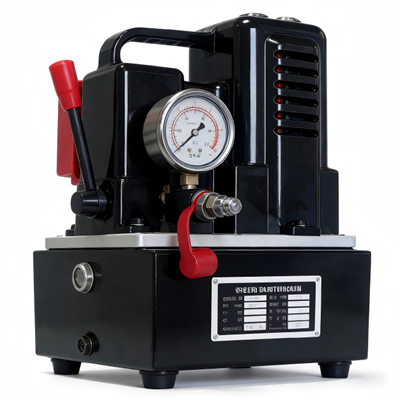
Traditional lifting systems often struggle with poor synchronization accuracy, cumbersome manual operation, and limited adaptability to complex loads, leading to inefficiencies in large-scale lifting tasks and potential safety hazards in heavy-load applications. Our PHF/PHP Series Synchronous Lifting System revolutionizes heavy lifting with intelligent control technology, delivering ±0.5mm synchronization accuracy and 700bar maximum operating pressure, setting new standards for precision and safety in complex lifting scenarios.
Core Technology Advancements
1.Intelligent Synchronous Control
Computer-Controlled System: Fully automated operation eliminates manual errors, enabling synchronized lifting or lowering of multiple points (2–120 lifting points) with consistent precision. The integrated PLC system ensures real-time data processing for dynamic load adjustments.
Pulse Conversion Speed Control: Advanced frequency modulation technology achieves ±0.5mm accuracy over the full stroke, critical for tasks requiring uniform load distribution (e.g., bridge segment alignment).
Automatic Zero-Finding Function: The system self-calibrates initial positions before operation, reducing setup time and ensuring baseline accuracy.
2.Enhanced Precision & Safety
Ultra-High Pressure Balance Valve Circuit: Maintains stable pressure distribution across all lifting points, preventing uneven load shifts even under 700bar pressure.
High-Precision Detection System: Real-time monitoring of displacement and pressure (sampling rate: 100Hz) provides instant feedback, triggering automatic adjustments if deviations exceed 0.5mm.
Speed Regulation: Adjustable oil flow allows precise control of lifting speed, accommodating different load weights and material sensitivities (e.g., fragile infrastructure components).
3.Adaptability & Modularity
Scalable Lifting Points: From 2 to 120 points, the modular design adapts to projects of any scale-whether lifting a small roof structure or synchronizing 50 points for bridge maintenance.
Multi-Mode Operation: Supports synchronous jacking, synchronous landing, and heavy-load weighing, eliminating the need for multiple specialized tools.
Application Scenarios
1.Infrastructure & Construction
Bridge Maintenance: Synchronously lifts bridge segments for bearing replacement or structural reinforcement, ensuring even load distribution to avoid cracking.
Roof Lifting: Precisely raises heavy roof structures during renovation, maintaining alignment of support beams.
Foundation Support: Stabilizes uneven foundations in industrial buildings by adjusting lifting points to distribute load uniformly.
2.Heavy Equipment & Industrial Installation
Heavy Equipment Installation: Safely positions large machinery (e.g., turbines, presses) with sub-millimeter accuracy, critical for alignment of moving parts.
Segmented Bridge Jacking: Aligns precast bridge segments during assembly, ensuring seamless connections between concrete sections.
3.Transportation & Civil Engineering
Railway Infrastructure: Adjusts railway tracks or support structures with synchronized lifting to maintain level alignment.
Pile Foundation Testing: Applies controlled loads to test foundation integrity, with real-time pressure feedback preventing overloading.
Preventive Maintenance & Safety Protocols
1.Pre-Operation Checks
Verify all lifting point connections (torque ≥ 50 N·m).
Calibrate displacement sensors (±0.1mm tolerance) and pressure gauges.
Check hydraulic oil cleanliness (ISO 18/15 standard) and level (70–85% reservoir capacity).
2.Operational Guidelines
Load Testing: Conduct 10% overload test for 5 minutes before full-load operation to validate system stability.
Incremental Lifting: Raise loads in 50mm increments, pausing for 30 seconds at each stage to monitor synchronization.
Emergency Shutdown: Activate manual override if synchronization error exceeds 1mm, or if temperature exceeds 55°C in hydraulic components.
3.Long-Term Maintenance
Replace hydraulic filters every 500 operating hours.
Inspect seal integrity and replace O-rings annually (or after 1,000 cycles).
Recalibrate PLC control system every 6 months to maintain ±0.5mm accuracy.
Engineering Philosophy
The PHF/PHP Series embodies intelligent precision meets industrial versatility:
Smart Control Core: By integrating computerized synchronization with real-time monitoring, we eliminate the guesswork in heavy lifting, turning complex tasks into predictable processes.
Safety-by-Design: Every component-from balance valves to overload protection-prioritizes operational safety, even in extreme pressure conditions.
Adaptable Innovation: Whether for a 2-point roof lift or a 120-point bridge project, the system scales without sacrificing precision, making it the ultimate solution for diverse heavy lifting challenges.
For custom configuration quotes or technical consultations on your specific lifting project, contact our engineering team to develop a tailored solution.