Industry Pain Points & Product Innovation
Traditional lifting systems often struggle with poor synchronization accuracy, cumbersome manual operation, and limited adaptability to complex loads, leading to inefficiencies in large-scale lifting tasks and potential safety hazards in heavy-load applications. Our PHF/PHP Series Synchronous Lifting System revolutionizes heavy lifting with intelligent control technology, delivering ±0.5mm synchronization accuracy and 700bar maximum operating pressure, setting new standards for precision and safety in complex lifting scenarios.
Core Technology Advancements
Intelligent Synchronous Control
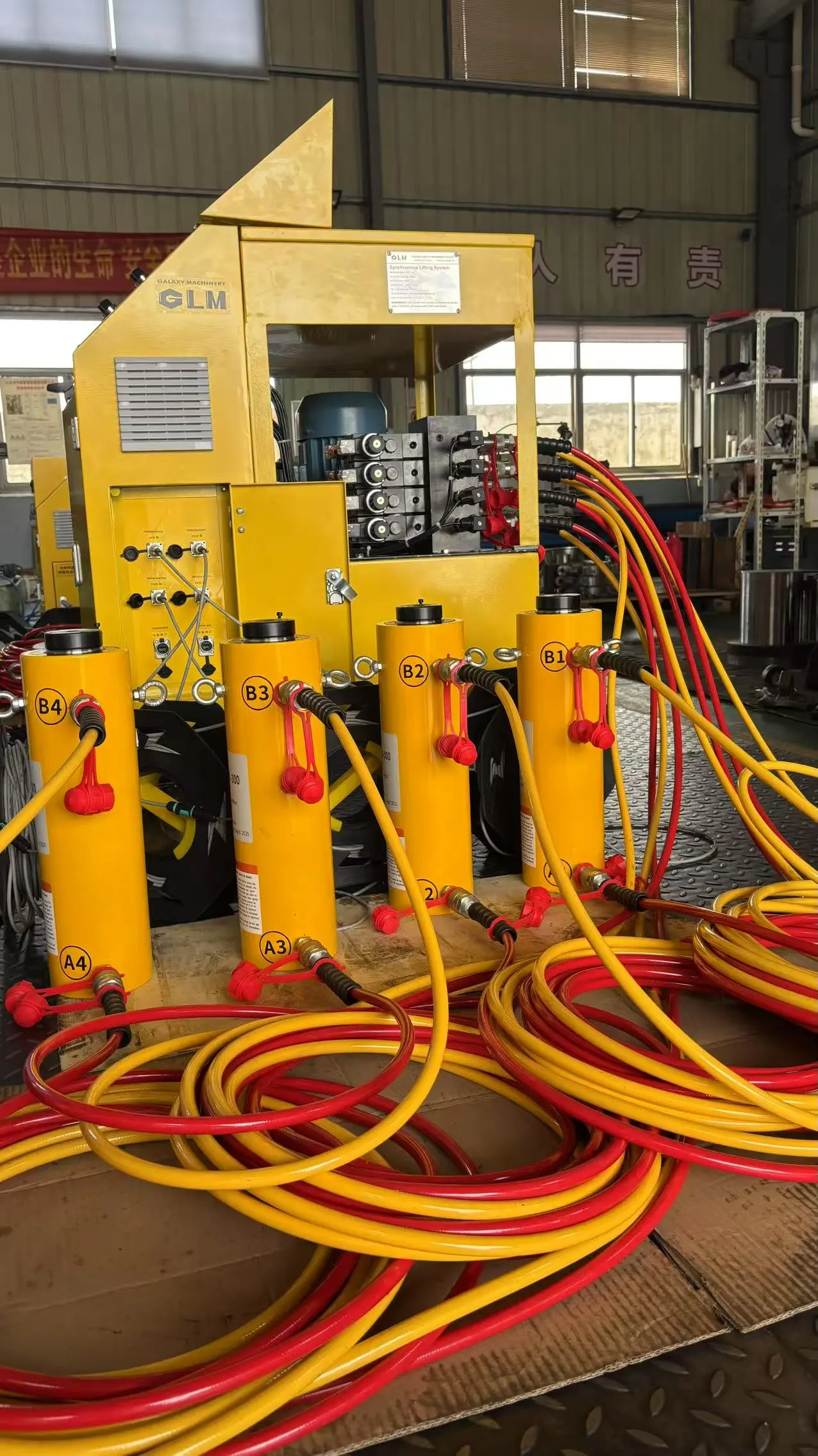
Computer-Controlled System: Fully automated operation eliminates manual errors, enabling synchronized lifting or lowering of multiple points (2–120 lifting points) with consistent precision. The integrated PLC system ensures real-time data processing for dynamic load adjustments.
Pulse Conversion Speed Control: Advanced frequency modulation technology achieves ±0.5mm accuracy over the full stroke, critical for tasks requiring uniform load distribution (e.g., bridge segment alignment).
Automatic Zero-Finding Function: The system self-calibrates initial positions before operation, reducing setup time and ensuring baseline accuracy.
Enhanced Precision & Safety
Ultra-High Pressure Balance Valve Circuit: Maintains stable pressure distribution across all lifting points, preventing uneven load shifts even under 700bar pressure.
High-Precision Detection System: Real-time monitoring of displacement and pressure (sampling rate: 100Hz) provides instant feedback, triggering automatic adjustments if deviations exceed 0.5mm.
Speed Regulation: Adjustable oil flow allows precise control of lifting speed, accommodating different load weights and material sensitivities (e.g., fragile infrastructure components).
Adaptability & Modularity
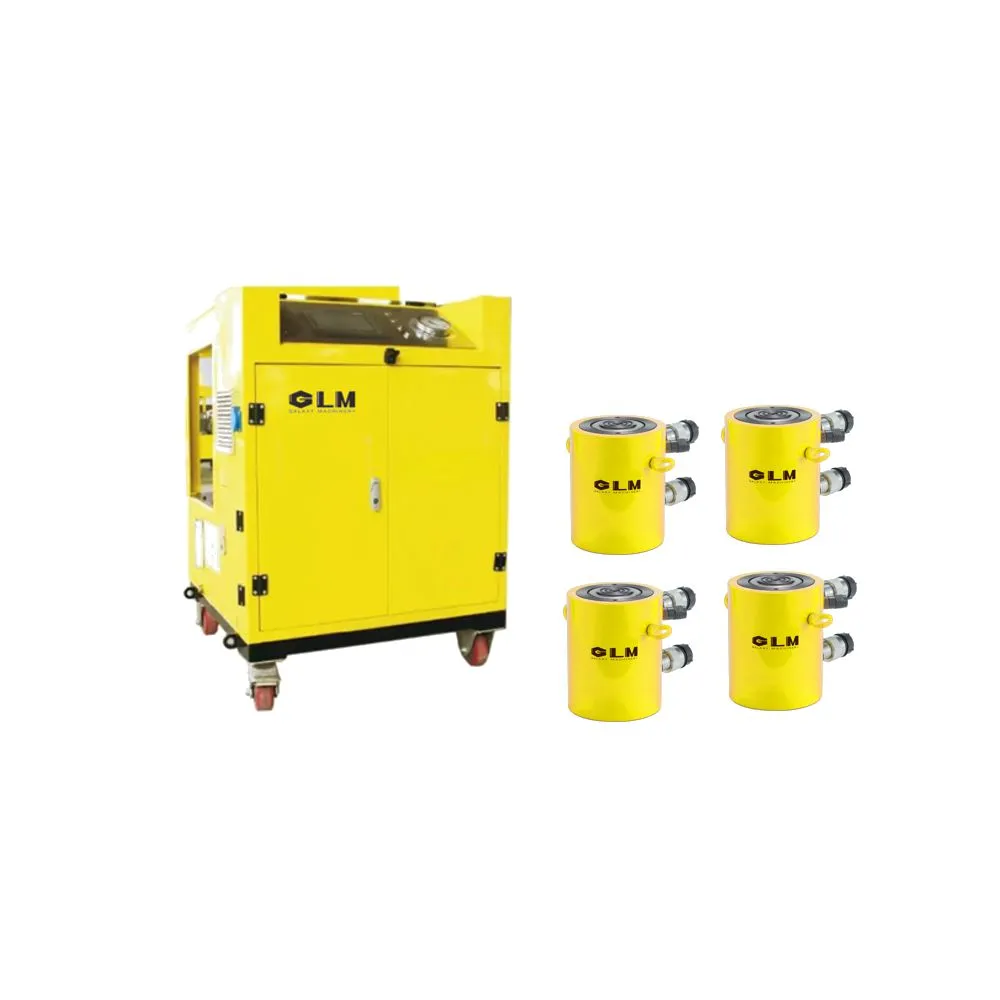
Scalable Lifting Points: From 2 to 120 points, the modular design adapts to projects of any scale-whether lifting a small roof structure or synchronizing 50 points for bridge maintenance.
Multi-Mode Operation: Supports synchronous jacking, synchronous landing, and heavy-load weighing, eliminating the need for multiple specialized tools.
Application Scenarios
Infrastructure & Construction
Bridge Maintenance: Synchronously lifts bridge segments for bearing replacement or structural reinforcement, ensuring even load distribution to avoid cracking.
Roof Lifting: Precisely raises heavy roof structures during renovation, maintaining alignment of support beams.
Foundation Support: Stabilizes uneven foundations in industrial buildings by adjusting lifting points to distribute load uniformly.
Heavy Equipment & Industrial Installation
Heavy Equipment Installation: Safely positions large machinery (e.g., turbines, presses) with sub-millimeter accuracy, critical for alignment of moving parts.
Segmented Bridge Jacking: Aligns precast bridge segments during assembly, ensuring seamless connections between concrete sections.
Transportation & Civil Engineering
Railway Infrastructure: Adjusts railway tracks or support structures with synchronized lifting to maintain level alignment.
Pile Foundation Testing: Applies controlled loads to test foundation integrity, with real-time pressure feedback preventing overloading.
Preventive Maintenance & Safety Protocols
Pre-Operation Checks
Verify all lifting point connections (torque ≥ 50 N·m).
Calibrate displacement sensors (±0.1mm tolerance) and pressure gauges.
Check hydraulic oil cleanliness (ISO 18/15 standard) and level (70–85% reservoir capacity).
Operational Guidelines
Load Testing: Conduct 10% overload test for 5 minutes before full-load operation to validate system stability.
Incremental Lifting: Raise loads in 50mm increments, pausing for 30 seconds at each stage to monitor synchronization.
Emergency Shutdown: Activate manual override if synchronization error exceeds 1mm, or if temperature exceeds 55°C in hydraulic components.
Long-Term Maintenance
Replace hydraulic filters every 500 operating hours.
Inspect seal integrity and replace O-rings annually (or after 1,000 cycles).
Recalibrate PLC control system every 6 months to maintain ±0.5mm accuracy.
Engineering Philosophy
The PHF/PHP Series embodies intelligent precision meets industrial versatility:
Smart Control Core: By integrating computerized synchronization with real-time monitoring, we eliminate the guesswork in heavy lifting, turning complex tasks into predictable processes.
Safety-by-Design: Every component-from balance valves to overload protection-prioritizes operational safety, even in extreme pressure conditions.
Adaptable Innovation: Whether for a 2-point roof lift or a 120-point bridge project, the system scales without sacrificing precision, making it the ultimate solution for diverse heavy lifting challenges.