What Is a Hydraulic Bolt Tensioner?
A hydraulic bolt tensioner is an ultra-high-pressure hydraulic tool that applies direct axial tension to elongate a bolt within its elastic range. After the nut is hand-tightened, hydraulic pressure is released, leaving precise and consistent preload in the bolt shank. Unlike torque wrenches, it avoids torsional stress and friction interference, making it ideal for high-strength, large-diameter, and critical bolt joints.
Core Advantages of Hydraulic Bolt Tensioning
1. Unmatched Preload Accuracy
Direct axial tension eliminates friction loss; preload error can be controlled within ±2%–±5%. Ideal for flanges, pressure vessels, and pipeline connections where consistent loading prevents leaks and joint failure.
2. Zero Torsion, Extended Bolt Life
Pure axial loading avoids shear stress and thread galling. Bolts maintain mechanical properties longer, reducing replacement and downtime costs.
3. Synchronous Multi-Bolt Operation
Multiple tensioners connect to a single pump for simultaneous operation, ensuring uniform loading around flanges. Critical for pressure vessels, wind turbine towers, and large machinery.
4. Compact for Confined Spaces
Lightweight, short-profile designs fit narrow environments-engine rooms, tower interiors, and equipment clusters-where traditional tools cannot operate.
5. High Safety & Low Maintenance
No reaction forces or violent vibration. Automatic reset and durable surface treatment ensure stable performance under harsh conditions.
Series Overview & Application Scenarios
Based on GALAXY MACHINERY's catalog, mainstream hydraulic bolt tensioners include three series:
TS Series – General-Purpose Interchangeable Type
Bolt range: M20–M100 (3/4"–4")
Load capacity: 180–3110KN
Stroke: 15mm
Max pressure: 1500bar
Spring return; interchangeable pull heads
Applications: petrochemical, metallurgy, power generation, shipbuilding, and general machinery.
TG Series – Gravity Return Multi-Purpose
Bolt range: M20–M100 (3/4"–4")
Load capacity: 228–2643KN
Stroke: 10–15mm
Max pressure: 1500bar
Gravity return; sequential synchronous drive
Applications: large flanges, pressure vessels, heavy equipment assembly.
TW Series – Dedicated for Wind Turbines
Bolt range: M30–M64
Load capacity: 465–2221KN
Stroke: 8–10mm
Max pressure: 1500bar
Double-stage cylinder; automatic retraction
Applications: wind tower flanges, host joints, blade bolts, and nacelle connections.
Matching Hydraulic Power Units
Tensioners require ultra-high-pressure pumps for reliable performance:
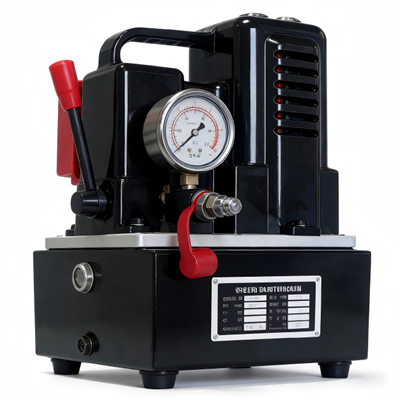
HEP Series Electric Pumps: 1500bar, 6L tank, 0.4L/min flow; quiet, stable, economical for fixed workstations.
HAP Series Air Pumps: 1500–2800bar, explosion-proof, 4–8bar air input; for hazardous zones and mobile use.
SAP Series Hand Pumps: Portable, for field or emergency use.
How to Select the Right Bolt Tensioner
Bolt Size: Confirm metric (M) or imperial; choose compatible series.
Required Load: Calculate target preload; select model with adequate capacity.
Working Space: Prefer compact, short-stroke designs in confined areas.
Operation Mode: Single or synchronous multi-bolt; choose pump with multi-outlet.
Environment: Explosion-proof areas use air-driven pumps; offshore needs corrosion-resistant bodies.
Industry Outlook
As industrial equipment trends toward large-scale, high-strength, and high-precision, hydraulic bolt tensioners are increasingly irreplaceable. They improve assembly quality, shorten cycles, lower costs, and enhance safety-supporting intelligent manufacturing and equipment reliability upgrades.
Conclusion
Hydraulic bolt tensioners represent precision, efficiency, and safety in modern bolting technology. Whether for wind, oil & gas, shipbuilding, or heavy industry, they provide stable, long-lasting bolted connections. Choosing the right model and matching pump ensures projects meet strict engineering standards while boosting productivity and safety.