In the fields of industrial manufacturing, automobile maintenance, construction engineering, etc., the tightening accuracy of bolts and nuts directly affects the safety and reliability of equipment. Digital electric torque wrench has become a core tool in modern assembly operations with its intelligent and high-precision characteristics. This article will deeply analyze its core advantages, technical parameters and application scenarios to help enterprises accurately select and efficiently apply.
1. Core advantages: precise control and intelligent management
High-precision torque measurement
The digital electric torque wrench uses strain gauge sensors and digital processing technology, with an accuracy of ±1%. The real-time digital display screen intuitively feedbacks the torque value to avoid human reading errors, especially suitable for the assembly of key components that are sensitive to torque (such as engines and bridge bolts).
Multi-mode operation and intelligent alarm
Peak hold mode: Record the maximum torque value during tightening for easy quality traceability.
Tracking mode: Dynamically display real-time torque, suitable for operations that require continuous adjustment.
Preset alarm function: Sound and light prompts when the set value is reached to reduce the risk of over-tightening or under-tightening.
Data management and traceability
High-end models support data storage (such as 2000 sets of records) and USB/Bluetooth transmission, which is convenient for quality analysis and compliance review. Some products can also be connected to a computer to realize digital management of production processes.
Ergonomic and durable design
Lightweight aluminum alloy body (such as GLM series) combines strength and portability, suitable for narrow space operations.
Anti-slip grip and backlit screen improve operating comfort and adapt to harsh environments.
2. Key technical parameters and selection guide
Torque range
Select according to application scenarios:
Small torque (1-50 N·m): electronic equipment, watch repair.
Medium torque (50-500 N·m): automobile tires, mechanical assembly.
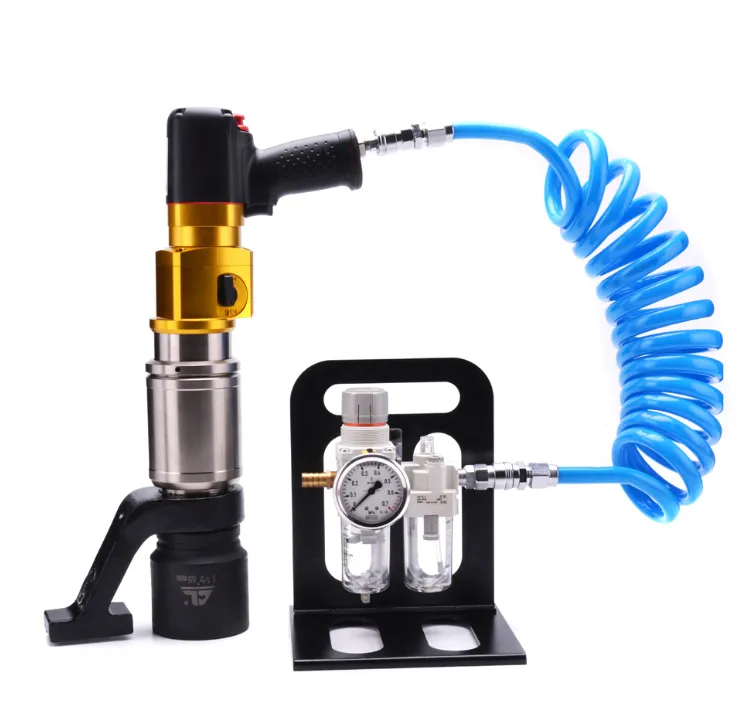
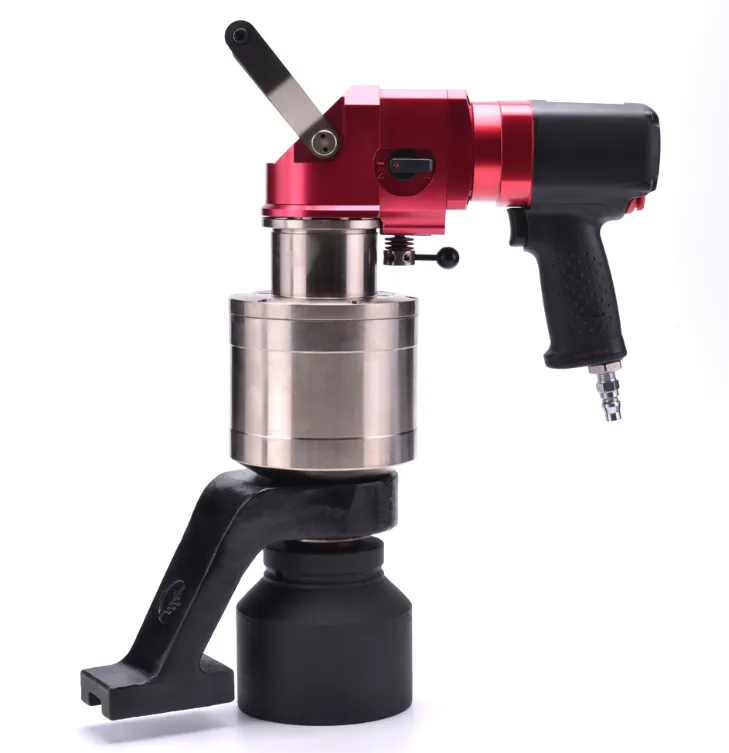
Large torque (500-3000 N·m): wind power equipment, heavy machinery.
Functional scalability
Unit switching: support N·m, lb·ft, kgf·cm and other international general units.
Multi-interface compatibility: replaceable screwdriver bits (open, plum blossom, hook, etc.), suitable for different fasteners.
Brand and cost-effectiveness
Well-known brands (such as Shanghai Fugong and Keweier) provide ±1% high-precision models, with price ranges ranging from thousands to tens of thousands of yuan. It is recommended to give priority to products that support calibration services.
3. Typical application scenarios
Automobile manufacturing and maintenance
Tightening engine bolts: ensure the stability of the power system.
Tire installation: avoid ring unscrewing or thread slipping due to improper torque.
Construction engineering and bridge construction
Steel structure bolt tightening: ensure the wind and earthquake resistance of large structures.
Aerospace and precision instruments
Aircraft component assembly: error control within ±1 N·m to prevent stress concentration.
Medical equipment assembly: avoid failure of small parts due to overload.
4. Maintenance and long-term use recommendations
Regular calibration: calibrate every year or every 5,000 uses to ensure accuracy.
Cleaning and maintenance: avoid oil intrusion into the sensor and store it in a dry environment.
Operational specifications: Overload is prohibited, and the wrench should be kept perpendicular to the workpiece when applying torque.
5. Purchase strategy and cooperation with manufacturers
When choosing a digital electric torque wrench, comprehensive considerations are required:
Accuracy requirements: Precision industries prefer ±1% error models.
Function expansion: Data recording and transmission functions help quality management.
After-sales service: Choose a brand that provides calibration and maintenance support.
Through precise selection and scientific management, digital electric torque wrenches can significantly improve assembly efficiency and reduce rework costs. They are indispensable smart tools in the era of Industry 4.0.