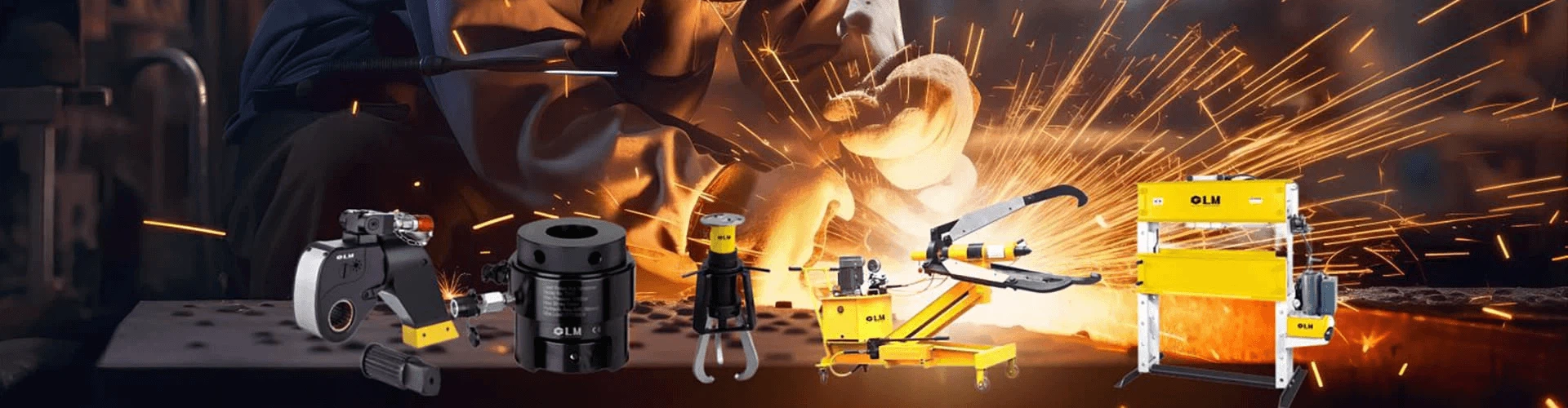
Hydraulic wrenches can control the pretightening force of bolts more accurately and reliably, have large output torque, are easy to use, and can be used in narrow spaces. This is particularly useful for some large-scale infrastructure and large-scale electromechanical equipment that use a large number of high-strength bolts, especially This is especially important for heavy machinery and equipment that are subject to loads and strong shock and vibration, and for industries that need to ensure the sealing of pipeline containers. Below, we take the application of hydraulic torque wrenches in refineries and deep-sea assembly as examples to illustrate that hydraulic torque wrenches have been widely used in the petroleum and petrochemical industry.
Analysis of causes of flange leakage in refinery
There are many detachable connections between equipment and pipelines in a refinery, with flange connections being the most commonly used. According to statistics, a refinery with an annual output of 2.5 million tons has more than 200,000 flange connections. The failure of flange connections is mainly manifested by leakage. Since most oil refineries contain flammable, explosive, highly toxic or corrosive materials and media, major fires or personal casualties often occur due to flange leakage, so it is necessary to Pay attention to the sealing of flanges.
The factors causing flange leakage are as follows:
1. Flange issues:
Including flange sealing surface type problems, flange sealing surface surface roughness does not meet the requirements, flange stiffness is insufficient, etc.
2. Gasket performance issues:
Including the material of the gasket is not dense enough, has insufficient resistance to temperature and pressure fluctuations and medium corrosion, poor deformation rebound ability and small permanent deformation performance, insufficient hardness difference between the flange and the gasket, etc.
3. Bolt pre-tightening force problem
Including the bolt pre-tightening force does not act evenly and symmetrically on the gasket, the bolt pre-tightening force is too small or too large, etc.
4. Conditions of use
The usage conditions mainly refer to the pressure, temperature of the system and the physical and chemical properties of the medium. The impact of simple pressure or medium factors on sealing is not major. Only combined with temperature, especially under fluctuating high temperatures, will seriously affect the performance of the seal.
5. Installation problems
Including the flange surface cleanliness and roughness that do not meet the requirements, mechanical damage and corrosion damage, and residual old gaskets; the bosses on the flange surface cannot be aligned; the gap between the two flange surfaces is too large; the two sealing planes are The parallelism must meet the requirements of the type of gasket used; check that the form, material, size of the gasket and the bolts do not meet the specified requirements; the bolt pre-tightening force is uneven and the installation procedure is wrong; the gasket compression is insufficient; and timely maintenance is not performed and maintenance, etc.
6. Other issues
Including piping system layout, vibration, pipe flexibility and stress, etc. All the above problems are hidden dangers causing flange leakage. In order to achieve a safe and leak-free flange connection, it is extremely important to correctly preload the bolts and install the flange while ensuring that the performance of the flange and gasket meets the requirements.
Application of hydraulic wrench in oil refinery
Bolt force control is one of the main factors to ensure flange sealing, because flange sealing is achieved by tightening bolts and compressing gaskets. When pre-tightening the bolt, the flange is used to compress the gasket, causing the gasket to elastically or plastically deform, thereby filling the tiny unevenness on the flange surface to achieve sealing. During operation, the gasket can also retain a large sealing specific pressure and maintain a good sealing state. The bolt pre-tightening force must act evenly and symmetrically on the gasket. If the pre-tightening force is too small, the gasket cannot stop leaking without being tightened. However, if the pre-tightening force is too large, the gasket will often undergo excessive compression deformation, causing the gasket to undergo excessive compression deformation. The gasket loses its ability to rebound or even breaks.
Using a hydraulic torque wrench, the bolt pretightening force can act evenly and symmetrically on the gasket, thereby achieving a balanced and effective bolt load and completing the correct installation of the flange. Through the bolt tightening solution, the bolt tightening operation not only becomes simpler and more efficient, but also safe and reliable with higher precision, which greatly reduces the labor intensity of workers and reduces the risk of flange seal leakage. Moreover, the technical center not only provides first-class products, but also provides many tailor-made services. This is the core competitiveness of hydraulic wrenches.
Special attention should be paid to the fact that severe temperature fluctuations will seriously affect the sealing performance of the flange. At high temperatures, the dissolution and corrosion of gaskets by the medium intensifies, increasing the possibility of leakage. Flanges, bolts, and gaskets may undergo creep and stress relaxation, causing the sealing specific pressure to decrease. If both temperature and pressure fluctuate, The gasket will fatigue and the seal will fail. For seals used at low temperatures, due to the different cooling rates of flanges and bolts, the gasket pre-tightening force will be reduced unevenly. In addition, the shrinkage and elasticity reduction of the gasket at low temperatures will accelerate the occurrence of leaks.
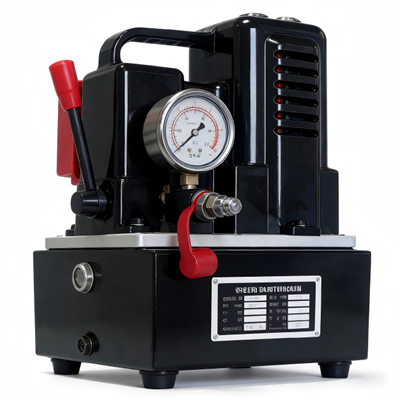
Therefore, it is necessary to ensure that the flange operating conditions are stable and to avoid drastic fluctuations in pressure and temperature. After using for a period of time, the bolts must be tightened again, which is especially important for use in high temperature and hot and cold cycles. In addition, hydraulic wrenches are usually equipped with electric hydraulic pumps as the power source. Sites that require explosion protection can be equipped with pneumatic hydraulic pumps as the power source.